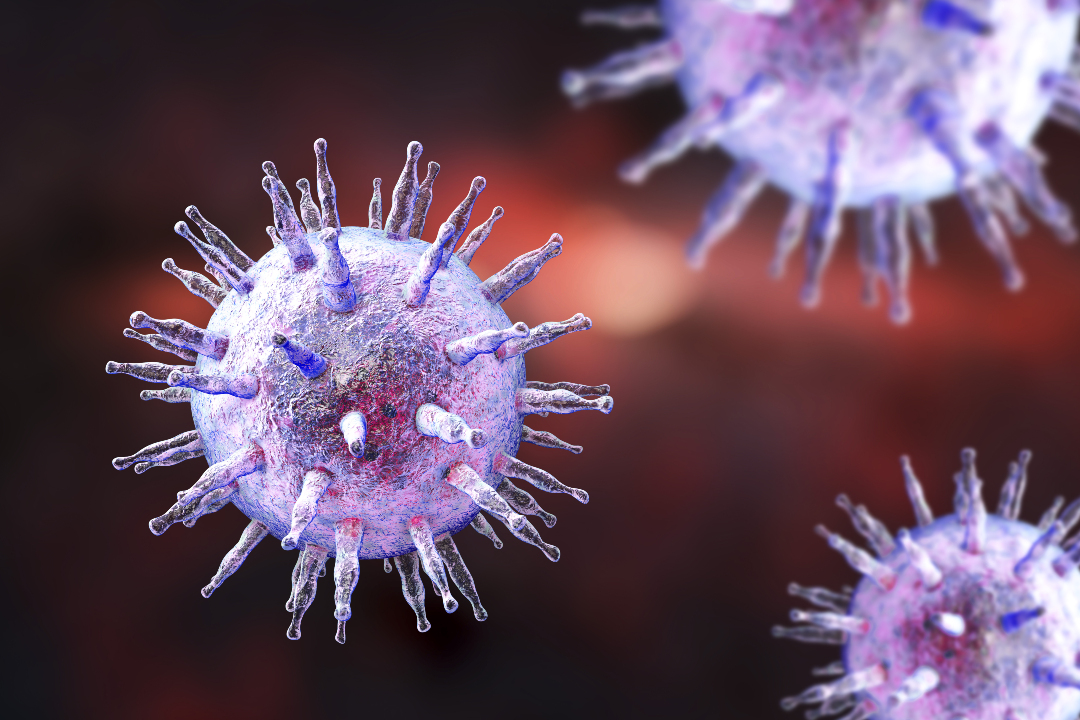
Scientists develop first-of-its-kind antibody to block Epstein Barr virus
On Feb. 17, 2026, Fred Hutch Cancer Center scientists announced reaching a crucial milestone in blocking Epstein Barr virus (EBV), a pathogen estimated to infect 95% of the global population that is linked to multiple types of cancer, neurodegenerative diseases and other chronic health conditions.
Using mice with human antibody genes, the research team developed new genetically human monoclonal antibodies that prevent two key antigens on the surface of the virus from binding to and entering human immune cells. Published in Cell Reports Medicine, the study highlights one of the newly identified monoclonal antibodies that successfully blocked infection in mice with human immune systems when they were challenged with EBV.
A key challenge in the study was to pursue human monoclonal antibodies that could successfully halt EBV infection without triggering an anti-drug response to the antibodies themselves, a common response among patients treated with antibodies raised in other animals. The researchers targeted two antigens, gp350, which helps EBV bind to cell receptors, and gp42, which allows EBV to enter and infect human cells through a process called fusion. Using an innovative mouse model carrying human antibody genes, the effort yielded two monoclonal antibodies against gp350 and eight against gp42.
“Not only did we identify important antibodies against Epstein Barr virus, but we also validated an innovative a new approach for discovering protective antibodies against other pathogens,” noted Crystal Chhan, a pathobiology PhD student in the McGuire Lab. “As an early-career scientist, it was an exciting finding and has helped me appreciate how science often leads to unexpected discoveries.”
With help from Fred Hutch’s Antibody Tech Core, further analysis found sites of vulnerability that could be useful in future vaccine development. In the final step of the study, the research team discovered that one of the monoclonal antibodies against gp42 successfully prevented infection of EBV. Another monoclonal antibody against gp350 provided partial protection.
More than 128,000 people in the U.S. undergo solid organ and bone marrow transplant annually. However, there are no specific therapies to prevent EBV from infecting or reactivating in patients undergoing immunosuppression for transplant procedures. Post-transplant lymphoproliferative disorders (PTLD) are an aggressive and sometimes life-threatening lymphoma that can develop after immune suppression and is most often caused by unchecked EBV infection.
The scientists envision a future therapy in which an infusion of these monoclonal antibodies could prevent PTLD by blocking EBV infection and activation in the patient populations who face the highest risk of EBV-related complications.
Tags:
Source: Fred Hutch Cancer Center
Credit: