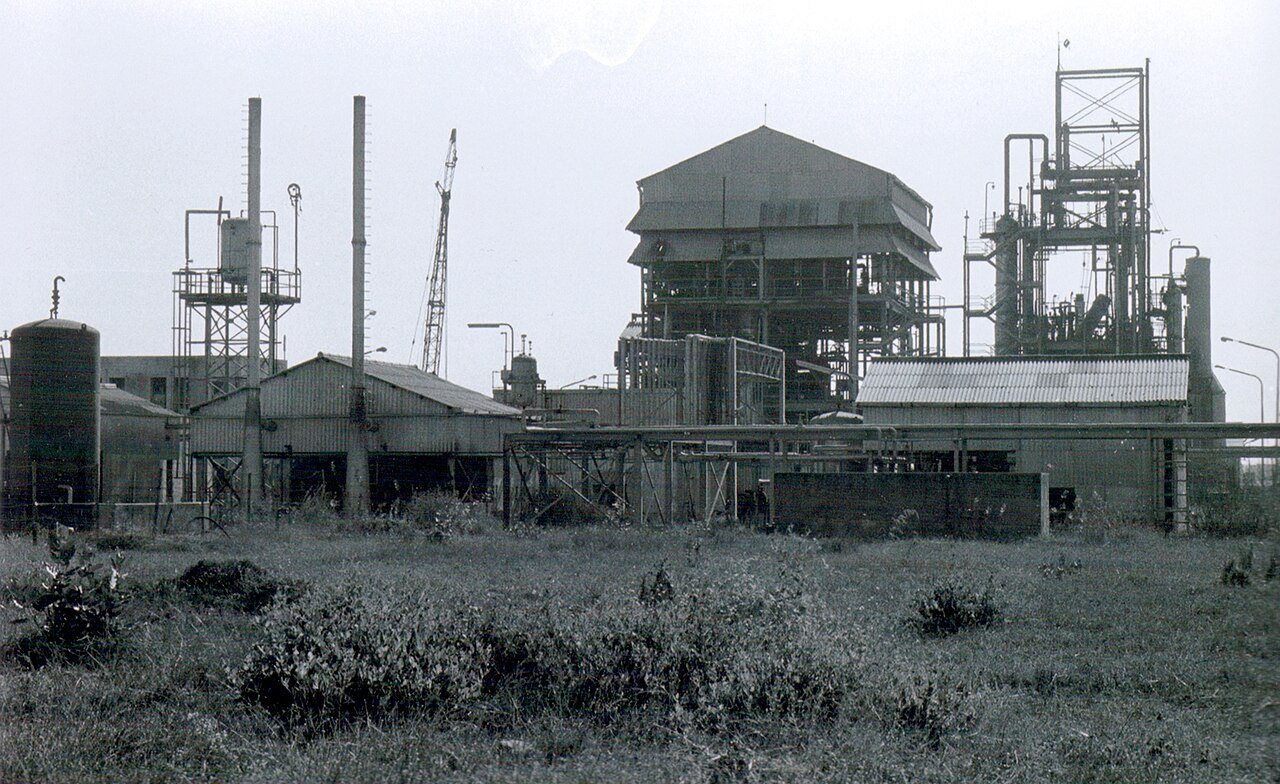
Union Carbide Toxic Gas Leak became the worst industrial accident in history
On Dec. 3, 1984, more than 40 tons of methyl isocyanate gas leaked from a Union Carbide Corp. (UCC) pesticide plant in Bhopal, India, immediately killing at least 3,800 people and causing significant morbidity and premature death for many thousands more.
At 11.00 PM on December 2, 1984, while most of the one million residents of Bhopal slept, an operator at the plant noticed a small leak of methyl isocyanate (MIC) gas and increasing pressure inside a storage tank. The vent-gas scrubber, a safety device designer to neutralize toxic discharge from the MIC system, had been turned off three weeks prior.
At around 1.00 AM, December 3, loud rumbling reverberated around the plant as a safety valve gave way sending a plume of MIC gas into the early morning air. Within hours, the streets of Bhopal were littered with human corpses and the carcasses of buffaloes, cows, dogs and birds. Estimates of the number of people killed in the first few days by the plume from the UCC plant run as high as 10,000, with 15,000 to 20,000 premature deaths reportedly occurring in the subsequent two decades. The Indian government reported that more than half a million people were exposed to the gas.
The company involved in what became the worst industrial accident in history immediately tried to dissociate itself from legal responsibility. Eventually it reached a settlement with the Indian Government through mediation of that country’s Supreme Court and accepted moral responsibility. It paid $470 million in compensation, a relatively small amount of based on significant underestimations of the long-term health consequences of exposure and the number of people exposed. By the end of October 2003, according to the Bhopal Gas Tragedy Relief and Rehabilitation Department, compensation had been awarded to 554,895 people for injuries received and 15,310 survivors of those killed. The average amount to families of the dead was $2,200.
The disaster indicated a need for enforceable international standards for environmental safety, preventative strategies to avoid similar accidents and industrial disaster preparedness.
Tags:
Source: National Library of Medicine
Credit: