University Engineers create robots barely visible to the naked eye that operate autonomously
On Dec. 17, 2025, researchers at the University of Pennsylvania’s (UPenn) School of Engineering and Applied Science, and collaborators from the University of Michigan announced they have created the world’s smallest fully programmable, autonomous robots: microscopic swimming machines that can independently sense and respond to their surroundings, operate for months, and cost just a penny each.
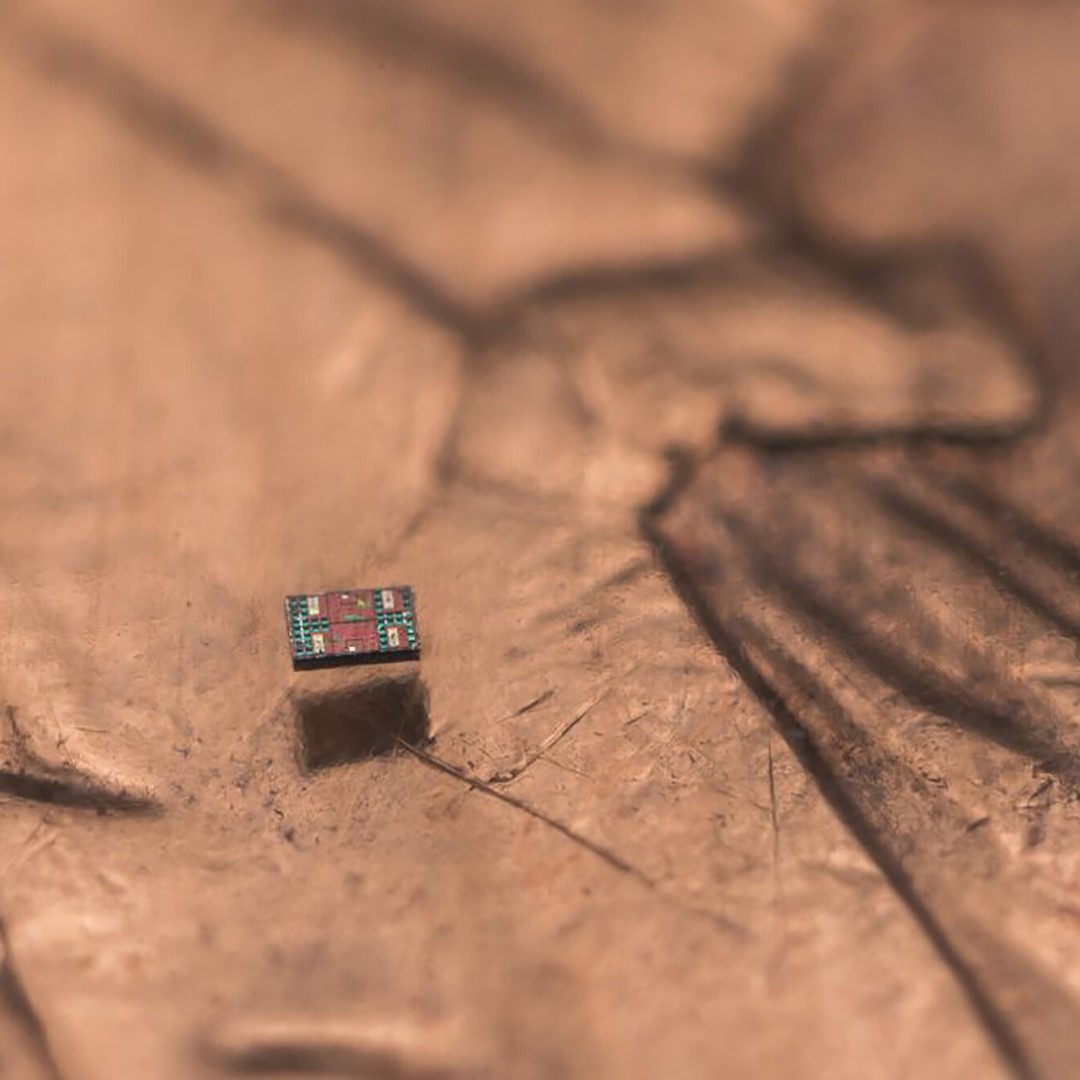
Barely visible to the naked eye, each robot measures about 200 by 300 by 50 micrometers, smaller than a grain of salt. Operating at the scale of many biological microorganisms, the robots could advance medicine by monitoring the health of individual cells and manufacturing by helping construct microscale devices. Powered by light, the robots carry microscopic computers and can be programmed to move in complex patterns, sense local temperatures, and adjust their paths accordingly.
Published in Science Robotics and Proceedings of the National Academy of Sciences, the robots operate without tethers, magnetic fields, or joystick-like control from the outside, making them the first truly autonomous, programmable robots at this scale.
“We’ve made autonomous robots 10,000 times smaller,” says Marc Miskin, assistant professor in electrical and systems engineering at Penn Engineering and the papers’ senior author. “That opens up an entirely new scale for programmable robots.” The forces that dominate the human world, like gravity and inertia, depend on volume. Shrink down to the size of a cell, however, and forces tied to surface area, like drag and viscosity, take over. “If you’re small enough, pushing on water is like pushing through tar,” says Miskin.
At the microscale, strategies that move larger robots, like limbs, rarely succeed. So the team had to design an entirely new propulsion system, one that worked with—rather than against—the unique physics of locomotion in the microscopic realm.
Tags:
Source: University of Pennsylvania
Credit: Image: Microrobot on a U.S. penny for scale. Courtesy: Michael Simari, University of Michigan.