Rwanda reports first-ever Marburg virus disease outbreak, with 26 cases confirmed
On Sept. 28, 2024, the World Health Organization (WHO) announced that Rwandan health authorities were intensifying outbreak control efforts following the detection of Marburg virus disease, with 26 cases confirmed and six deaths reported currently.
Cases of the virus were reported in seven of the country’s 30 districts. Twenty cases were in isolation and receiving treatment, while 161 people who came into contact with the reported cases had been identified and were being monitored as the authorities ramp up comprehensive response measures and deepen investigation to determine the origin of the infection.
In support of the ongoing efforts, World Health Organization (WHO) is mobilizing expertise, outbreak response tools, including emergency medical supplies to help reinforce the control measures being rolled out to curb the virus. A consignment of clinical care and infection prevention and control supplies is being readied and will be delivered to Kigali in the coming days from WHO’s Emergency Response Hub in Nairobi, Kenya.
Although there are several promising candidate medical countermeasures that are progressing through clinical development, there is no licensed vaccine currently available to effectively combat Marburg virus disease. WHO is coordinating a consortium of experts to promote preclinical and clinical development of vaccines and therapeutics against Marburg virus disease.
Marburg virus disease is highly virulent and causes haemorrhagic fever, with a fatality ratio of up to 88%. It is in the same family as the virus that causes Ebola virus disease. Illness caused by Marburg virus begins abruptly, with high fever, severe headache and severe malaise. Many patients develop severe haemorrhagic symptoms within seven days. The virus is transmitted to people from fruit bats and spreads among humans through direct contact with the bodily fluids of infected people, surfaces and materials.
Tags:
Source: World Health Organization
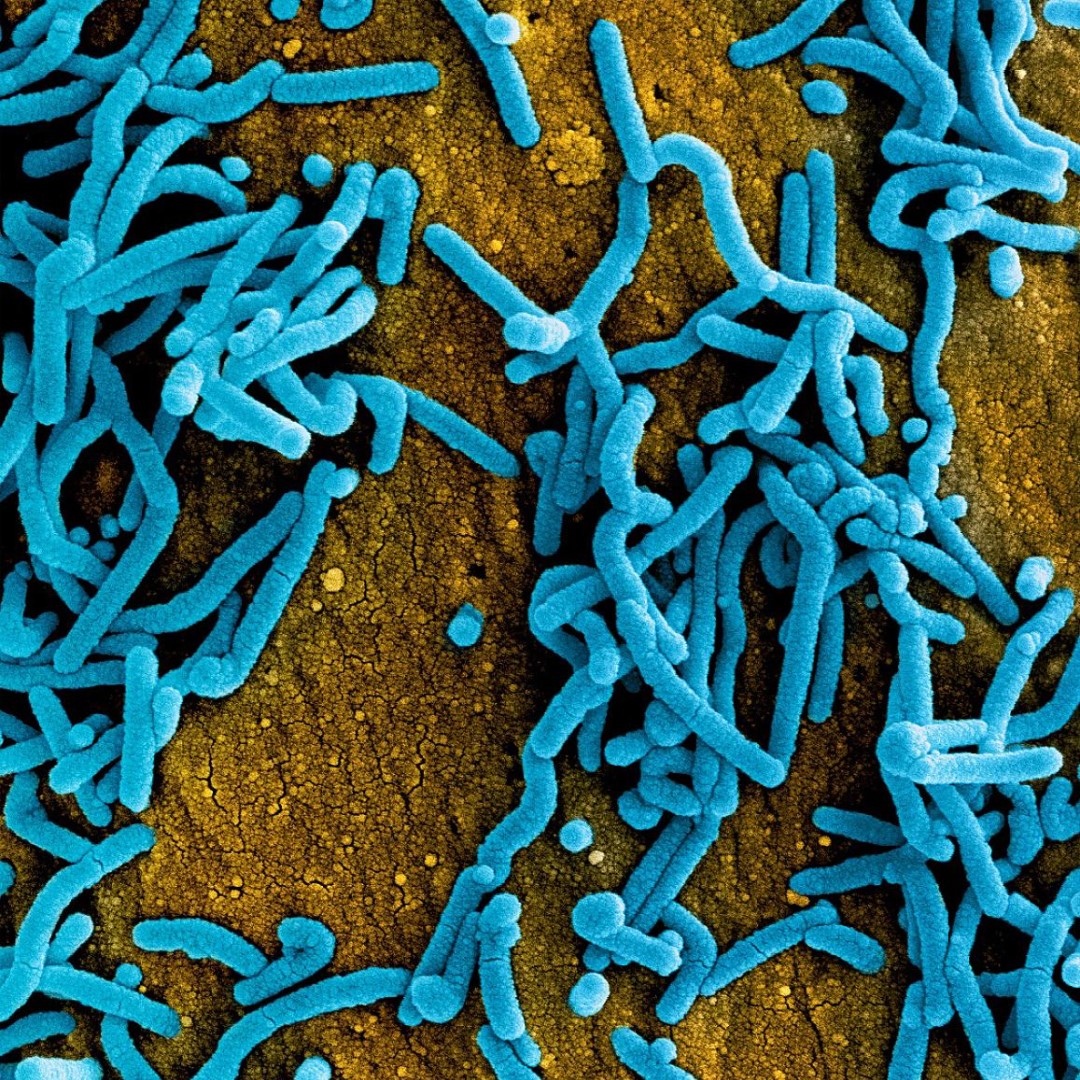
Credit: Photo: Colorized scanning electron micrograph of Marburg virus particles (blue) both budding and attached to the surface of infected VERO E6 cells (orange). Courtesy: National Institute of Allergy and Infectious Diseases, Fort Detrick, Maryland.