Washington State Life Science Research: NIH & The Gold Dust Twins
Washington State Life Science Research: NIH & The Gold Dust Twins
Washington’s life industry, like other leading U.S. life science research centers, was founded on visionary political leadership, specifically that of Senators Warren Magnuson and Henry Jackson who represented their state in the U.S. Congress for a combined total of eighty-nine years (1934-1983).
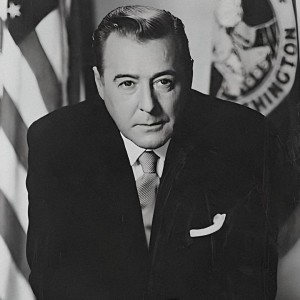
Warren G. Magnuson
Nicknamed the “Gold Dust Twins” for their ability to obtain federal funding, their rise to seniority leadership in Congress resulted in a growing stream of federal dollars into Washington state and the Pacific Northwest Region that continues to have a specific impact today.
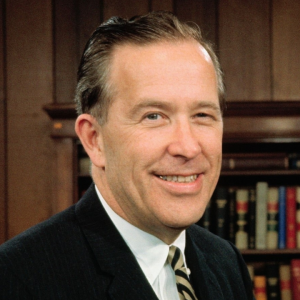
Henry Jackson
In fact, it can be argued that the very foundation of our nation’s life science industry is due largely to the work of Senator Warren Magnuson who, in 1937, introduced legislation creating the National Cancer Institute (NCI), and in 1945 introduced a bill to create a National Research Foundation, now known as the National Institutes of Health (NIH).
Locally, Senators Magnuson and Jackson were instrumental in directing the flow of federal funds into the state’s universities, and the Hanford Site in Richland, now known as Pacific National Northwest Laboratory. In 1972, Senator Magnuson helped secure federal funds through the NCI to establish the Fred Hutchinson Cancer Research Center, and in 1978 the UW Medical Center was renamed the Magnuson Health Sciences Center, honoring the state’s powerful senator whose accomplishments a half century ago continue to impact life science research locally, as well as nationally.
Due in large measure to NIH research, a person born in the U.S. today can expect to live nearly 30 years longer than someone born in 1900. Research into pediatric genetics and diseases has contributed to higher survival rates for infants.
More than 83% of the NIH’s funding is awarded to more than 300,000 researchers at more than 2,500 universities, medical schools, and other research institutions in every state, as well as around the world.
About 11% of the NIH’s budget supports projects that are conducted within its own laboratories on NIH’s Bethesda Campus.
Author: Phil Ness, LifeScienceHistory.com