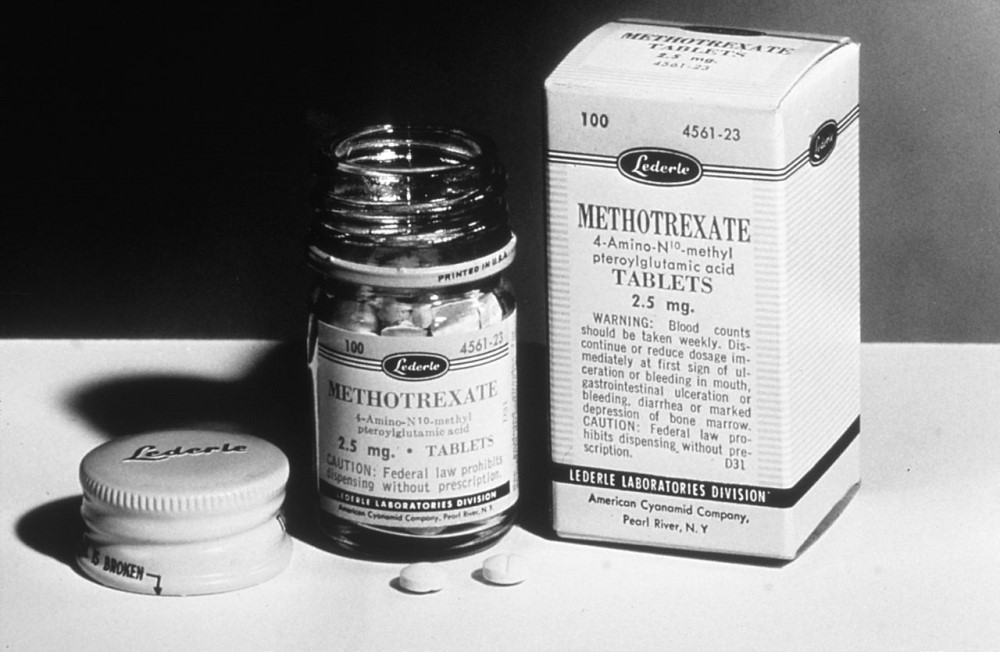
The FDA approved methotrexate, an antimetabolite derived from folic acid, and 6-mercaptopurine as anticancer drugs
On Dec. 7, 1953, the U.S. Food and Drug Administration (FDA) approved Dava Pharmaceuticals’ methotrexate oral tablet, an antimetabolite derived from folic acid, and 6-mercaptopurine as anticancer drugs. 6-TG and 6-MP were codeveloped by Gertrude Elion and George Hitchings, who received the Nobel Prize for development of these and other anticancer agents.
There is accumulating evidence to suggest that concomitant use of methotrexate (primarily at high doses) and PPIs such as omeprazole, esomeprazole, and pantoprazole may decrease methotrexate clearance. Decreased clearance may result in elevated and prolonged serum levels of methotrexate and/or its metabolite hydroxymethotrexate, possibly leading to methotrexate toxicities. In addition, there may be a class effect because this interaction has been described for multiple PPIs.
PPIs are used extensively, and health care practitioners should be aware of this potential interaction. In several case reports, methotrexate elimination normalized and no methotrexate toxicity was found when a histamine H2 blocker was substituted for a PPI, although no formal studies have been conducted. This possible drug–drug interaction has been added to the labels for i.v. methotrexate and PPIs. Clinicians should consider substituting H2 blockers for PPIs when acid suppression is clinically indicated during methotrexate therapy.
Methotrexate was originally used to treat pediatric acute lymphoblastic leukemia (ALL). It’s an antimetabolite, a type of chemotherapy drug that prevents cancer cells from replicating. Methotrexate works by blocking the body’s use of folic acid.
At higher dose levels, monitoring of serum methotrexate elimination is performed because delayed elimination can result in serious and potentially life-threatening toxicities. The FDA label for methotrexate contains a number of boxed warnings for proper administration and monitoring, for various adverse events, and for potential drug–drug interactions. Besides methotrexate, its major metabolite 7-hydroxymethotrexate may also contribute to toxicities.
A number of medications are known to interact with methotrexate therapy through various mechanisms, and the drug is labeled for these drug–drug interactions. Nonsteroidal anti-inflammatory drugs (NSAIDs) have been reported to elevate and prolong serum methotrexate levels by reducing tubular secretion. Other drugs, such as salicylates, phenylbutazone, phenytoin, and sulfonamides, may increase methotrexate toxicity by displacing albumin-bound methotrexate. Probenecid inhibits renal tubular transport, which can result in higher serum concentrations of methotrexate.
Oral antibiotics such as tetracycline, chloramphenicol, and nonabsorabable broad spectrum antibiotics may decrease intestinal absorption of methotrexate or interfere with the enterohepatic circulation by inhibiting bowel flora and suppressing metabolism of the drug by bacteria. Finally, penicillin may reduce the renal clearance of methotrexate.
Tags:
Source: U.S. National Library of Medicine
Credit: