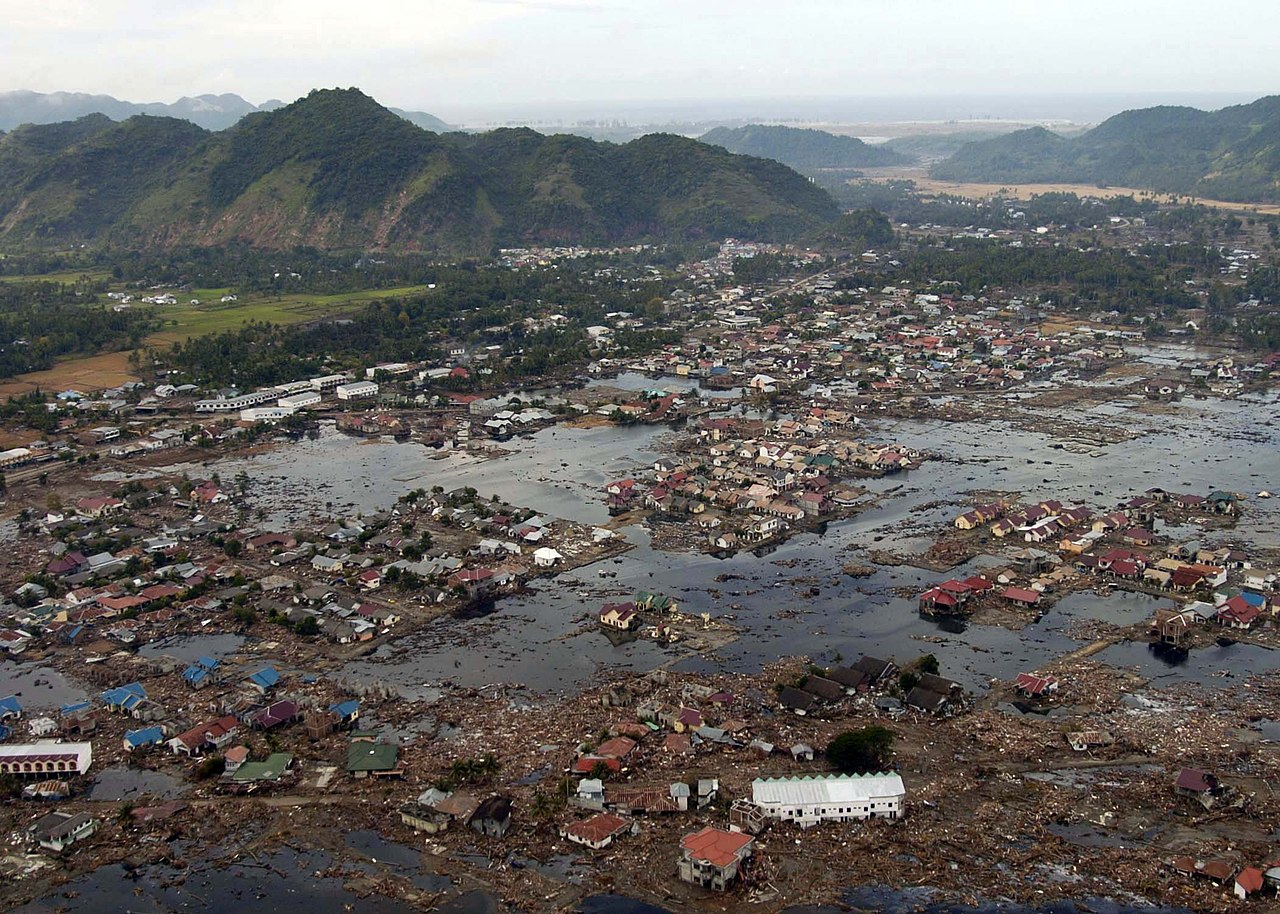
The CDC assisted with the public health response to the devastating tsunami in the Indian Ocean
On Dec. 26, 2004, the U.S. Centers for Disease Control and Prevention (CDC) assisted with an earthquake measuring 9.2 on the Richter scale off the northwest coast of the island of Sumatra, Indonesia, and produced a tsunami that caused the deaths of an estimated 230,000 persons in India, Indonesia, the Maldives, Somalia, Sri Lanka, and Thailand.
A measles vaccination campaign targeted all children aged 6 months–15 years. Among eligible children aged 12–59 months, the percentage receiving measles vaccination ranged from 37.3% of IDPs in Aceh Besar to 58.2% of nondisplaced children in Banda Aceh.
Before the December 2004 tsunami, Aceh Province was isolated by ongoing civil conflict. After the tsunami, unprecedented measures by local and international agencies were taken to provide temporary shelter, food, and drinking water.
An early warning disease surveillance system was implemented, and a mass measles vaccination campaign, together with administration of vitamin A, was initiated as a collaborative program of the Indonesian government, World Health Organization (WHO), UNICEF, and other nongovernmental organizations. No large disease outbreaks were reported during the relief period, and mortality from disease was low.
Data from these and other surveys in Aceh Province were used to plan longer-term health and nutrition interventions. In Simeulue, for example, local government and nongovernmental organizations are strengthening the growth-monitoring system. This will improve vaccination coverage, micronutrient supplementation, and access to feeding programs for malnourished children. Measles and deworming campaigns will be conducted in Aceh Province. These and other programs, such as construction of water and sanitation infrastructure, will benefit both IDPs and nondisplaced populations.
Tags:
Source: U.S. Centers for Disease Control and Prevention
Credit: