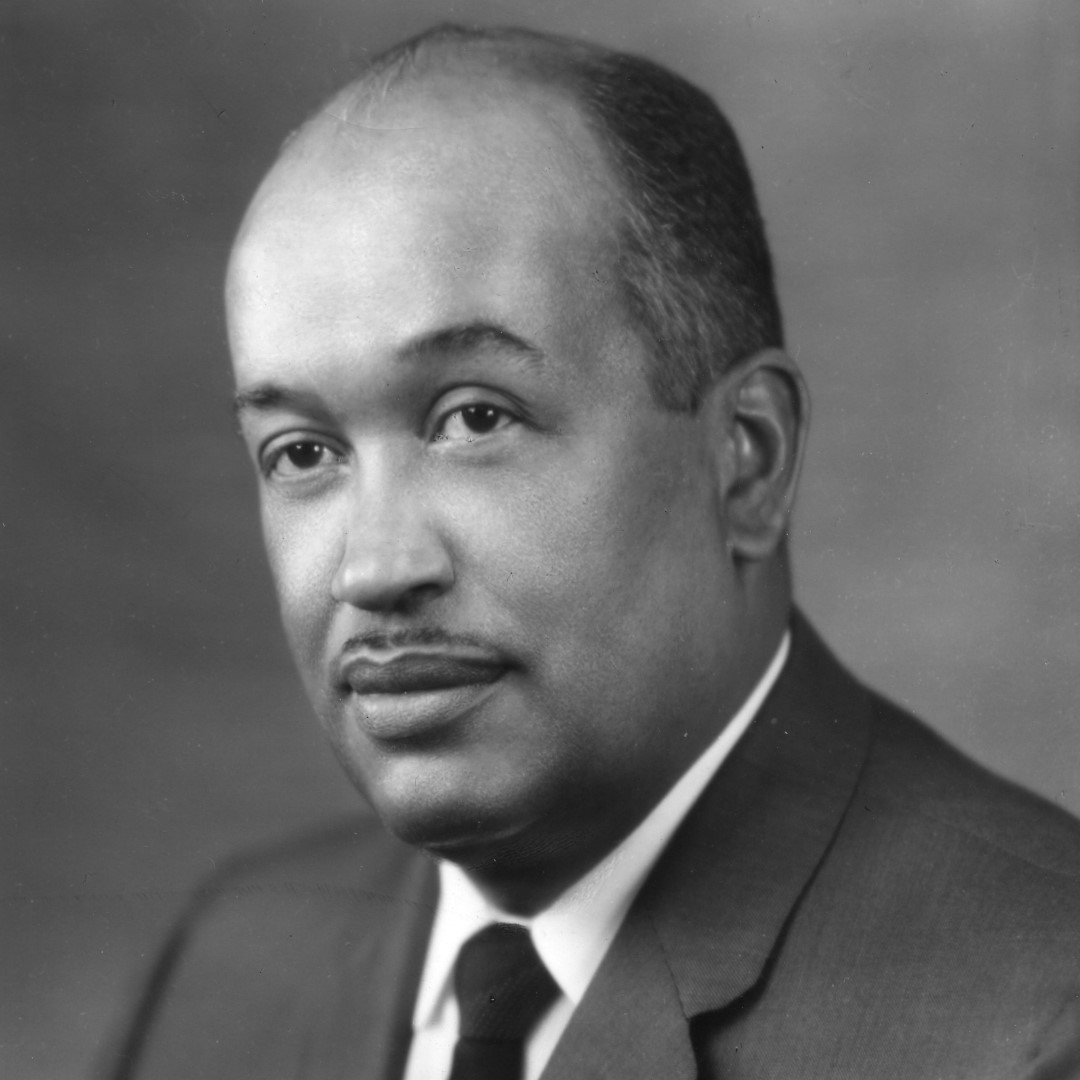
Dr. Herman Branson co-authored a paper detailing his discovery of the alpha-helix structure in proteins
In March 1951, Dr. Herman Branson co-authored a paper alongside Linus Pauling and Robert Corey, detailing the structure of the alpha-helix, a key component of protein structure, marking a significant discovery in the field of protein biology, proposed the α-helix and the β-sheet, now known to form the backbones of tens of thousands of proteins.
They deduced these fundamental building blocks from properties of small molecules, known both from crystal structures and from Pauling’s resonance theory of chemical bonding that predicted planar peptide groups. Earlier attempts by others to build models for protein helices had failed both by including nonplanar peptides and by insisting on helices with an integral number of units per turn. In major respects, the Pauling–Corey–Branson models were astoundingly correct, including bond lengths that were not surpassed in accuracy for >40 years. However, they did not consider the hand of the helix or the possibility of bent sheets. They also proposed structures and functions that have not been found, including the γ-helix.
In major respects, the Pauling–Corey–Branson models were astoundingly correct, including bond lengths that were not surpassed in accuracy for >40 years. Their work had a significance for proteins comparable to that 2 years later of the Watson–Crick paper for DNA, which adopted the Pauling–Corey model-building approach.
Tags:
Source: National Academy of Science
Credit: Photo: Dr. Herman Branson. Courtesy: American Crystallographic Association.