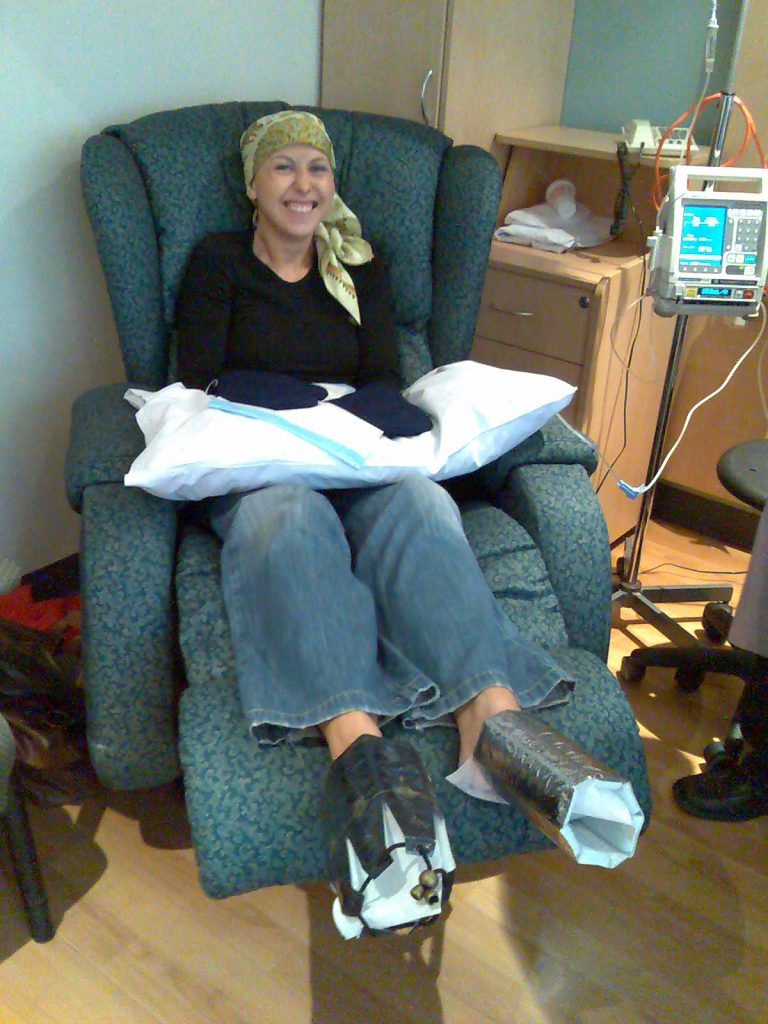
NCI trial reported targeted agent trastuzumab and standard chemo cut risk of HER-2-positive breast cancer
On Apr. 25, 2005, the combination of the targeted agent trastuzumab (Herceptin) and standard chemotherapy cuts the risk…
On Feb. 11, 2005, Autism Speaks was founded in New York City by Bob and Suzanne Wright, grandparents…
On Feb. 4, 2005, World Cancer Day was established by The World Health Organization. Cancer is a leading…
On Jan. 8, 2005, researchers from Baylor University Medical Center reported that although the origin of smallpox is…
In Jan. 2005, the U.S. Food and Drug Administration (FDA) approved an albumin-stabilized nanoparticle formulation of paclitaxel (Abraxane)…
In 2005, The Center for Drug Discovery was established at the University of Georgia to fulfill a critical…
In 2005, Genome Alberta, was established in partnership with Genome Canada Industry Canada and the Province of Alberta,…
In 2005, The Patient Navigator Research Program (PNRP), a National Cancer Institute initiative, was underway to assess the…
On Dec. 10, 2004, a National Cancer Institute (NCI) supported study determined that a new molecular test done…
On Nov. 18, 2004, the U.S. Food and Drug Administration (FDA) announced it had approved Genentech’s drug Tarceva…
On Oct. 29, 2004, the U.S. Food and Drug Administration (FDA) approved Letrozole for the extended adjuvant treatment…
On Jun. 16, 2004, Portland’s Schnitzer Investment Corp. donated nearly 20 acres of land at the South Willamette…
Apr. 14, 2004, the National Center for Vermiculite and Asbestos-Related Cancers was established in Michigan in response to…
On Jan. 29, 2004, researchers at Oregon Health & Science University (OHSU) School of Medicine’s Casey Eye Institute…
On Jan. 9, 2004, the Food and Drug Administration (FDA) announced the approval of Sanofi’s Eloxatin (oxaliplatin) injection…
In 2004, the Oklahoma Medical Research Foundation (OMRF) opened the state’s first small animal magnetic resonance imaging facility….
In 2004, the world’s first use of low-dose radioactive palladium ‘seeds’ as used to treat breast cancer patients…
In 2004, William Hagopian, M.D., Ph.D., launched The Environmental Determinants of Diabetes in the Young (TEDDY) study at…
In 2004, the Emergency Use Authorization (EUA) program was established in 2004, when the Project BioShield Act, among…
In 2004, data from the Women’s Health Initiative (WHI) study show that women who take estrogen in combination…
On Nov. 19, 2003, a novel approach to treatment of solid cancers involved therapeutic agents that inhibit the…
On Oct. 21, 2003, scientists at Oregon Health Sciences University’s (OHSU) Casey Eye Institute announced they had found…
On Oct. 9, 2003, a Canadian-led international clinical trial found that post-menopausal survivors of early-stage breast cancer who…
On Oct. 9, 2003, The Scripps Research Institute (TSRI) announced the establishment of a major science center in…
On Sept. 4, 2003, the National Center for Research Resources (NCCR) awarded a $6.7 million grant to the…
On Jun. 24, 2003, results of the Prostate Cancer Prevention Trial (PCPT), testing the effectiveness of finasteride to…
On Jun. 20, 2003, Genentech drug Xolair (omalizumab) was approved by the U. S. Food and Drug Administration…
On May 1, 2003, Mark Haddon’s The Curious Incident of the Dog in the Night-Time was published, allowing…
On Apr. 14, 2003, The International Human Genome Sequencing Consortium, led in the U.S. the National Human Genome…
On Mar. 5, 2003, taking daily aspirin for as little as 3 years was shown to reduce the…