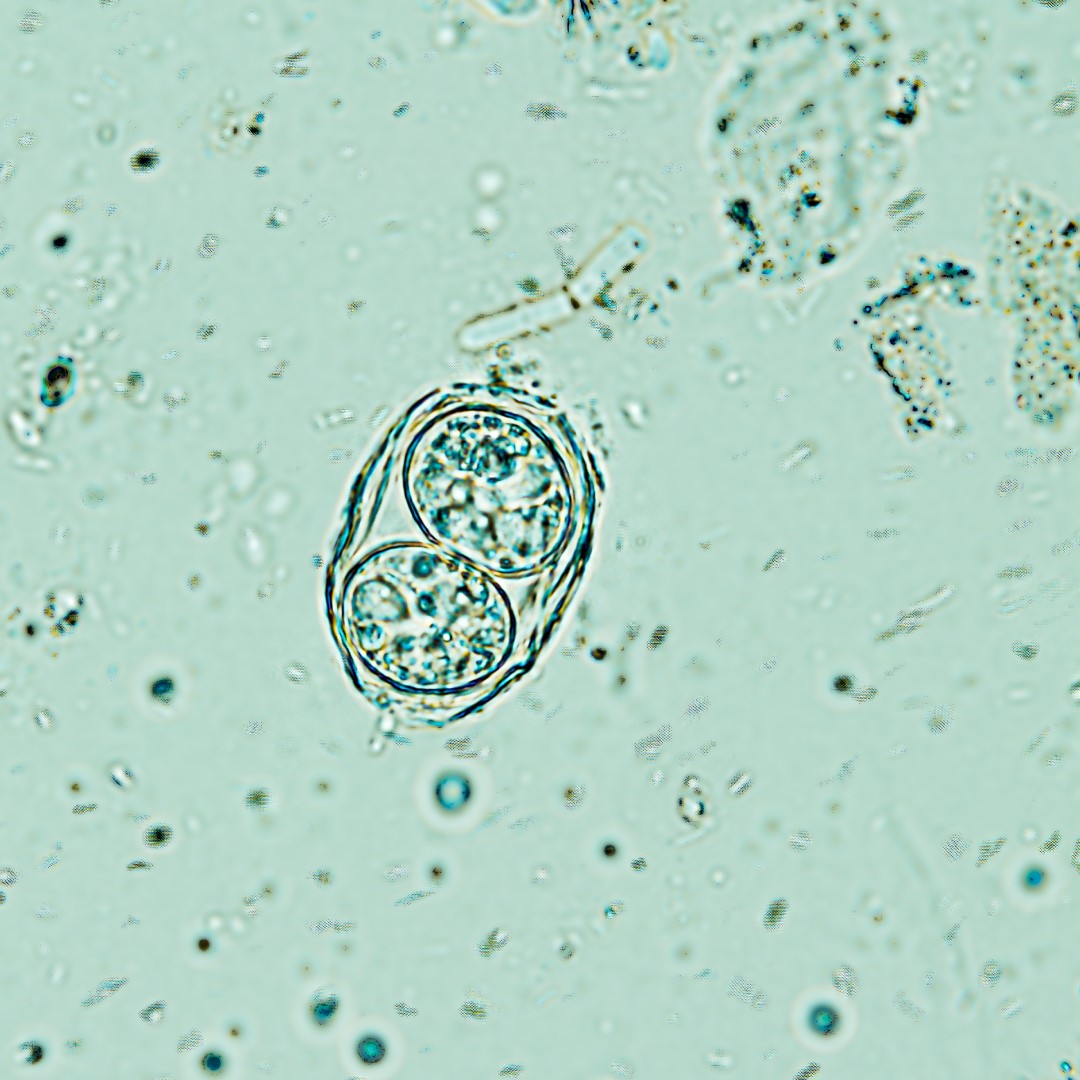
Toxoplasma gondii was identified in humans
On May 23, 1938, Toxoplasma gondii (T. gondi) was identified in humans gondii was identified in an infant girl delivered full term by Caesarean section at Babies’ Hospital in New York City. The girl died at one month of age. An autopsy discovered a lesions in her brain and eye tissue that were found to have been free of T. gondii. However, tissue from the girl inoculated intracerebrally into rabbits and mice developed encephalitis. The source of the T. gondii transmission was unknown.
The discovery of a T. gondii specific antibody test, Sabin-Feldman dye test in 1948 led to the recognition that T. gondii is a common parasite of warm-blooded hosts with a worldwide distribution.
Its life cycle was not discovered until 1970 when it was found that felids are its definitive host and an environmentally resistant stage (oocyst) is excreted in feces of infected cats.
Tags:
Source: U.S. National Library of Medicine
Credit: Image: Toxoplasma gondii oocyst under the microscope, isolated. Courtesy: Shutterstock.