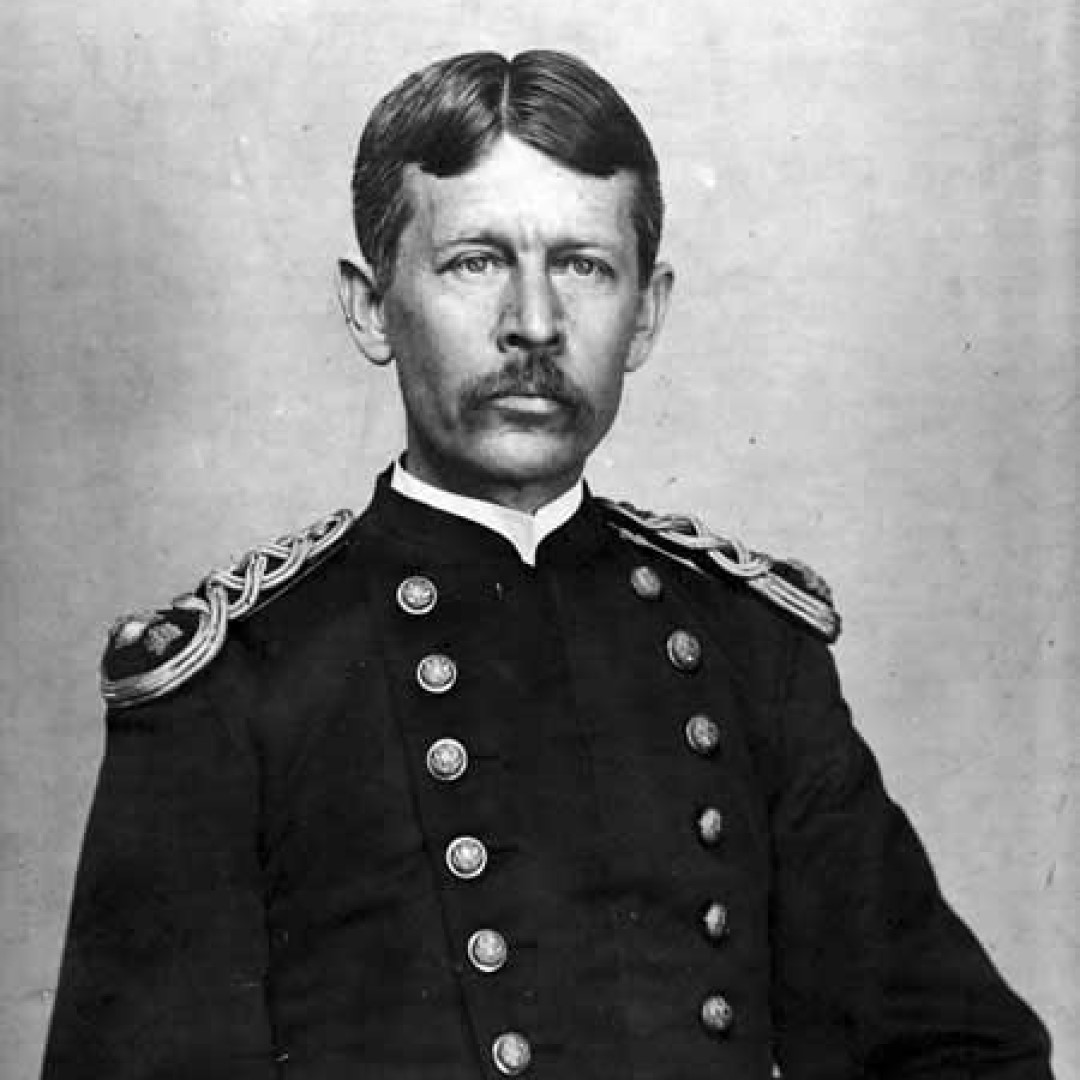
Walter Reed General Hospital in Washington, DC admitted its first patient
On May 1, 1909, Walter Reed General Hospital in Washington, DC admitted its first patient. The Commander of the Army General Hospital, Major William C. Borden had lobbied for several years for a new hospital to replace the aged one at Washington Barracks, now Ft. McNair.
Borden and Major Walter Reed, who became best known as the leading researcher to discover that yellow fever was transmitted by mosquitoes, became friends while teaching together at the Army Medical School. Sadly, one short year after his return trip from Cuba, Major Reed died from peritonitis following an appendectomy performed by his dear friend, Major Borden. Following Reed’s death, Borden became dedicated to seeing the completion of the new hospital which would co-locate the Army hospital, the Army Medical School, the Army Medical Museum and the Surgeon General’s Library. Borden was instrumental in naming the new hospital after his friend, Major Walter Reed.
In 1923, General John J. Pershing signed the order creating the Army Medical Center on the same campus as Walter Reed General Hospital. World War I saw the hospital’s capacity grow from 80 patient beds to 2,500 in a matter of months. Through World War II, Korea and Vietnam, the facility treated hundreds of thousands of injured American soldiers. As the complex grew, a new Armed Forces Institute of Pathology building was built on the Walter Reed Army Medical Center campus in 1955, and the Armed Forces Institute of Pathology added an addition in 1971.
On September 26, 1977, the additional structures were dedicated by Walter Reed’s granddaughter, Daisy Royce; President Dwight D. Eisenhower’s widow, Mamie Eisenhower, and an array of military leaders. The hospital itself stood 125 feet, as tall as a 10-story building. There were 5,500 rooms covering 28 acres of floor space. The distance around the top three floors stretched the length of six football fields. The building was designed for the highest-quality patient care and comfort. It offered accommodations for 250 patients, admitting more than 14,000 a year.
In 1994, the main building was rededicated and was named the Heaton Pavilion. It honors the late LTG Leonard Heaton, a former commander of Walter Reed from 1953 to 1959, who served as the Army Surgeon General from 1959 to 1969. The Rumbaugh Parking Garage was dedicated in 1993, the Borden Pavilion in 1995, the Mologne House opened in 1997 and the Military Advanced Training Center opened in 2007. Walter Reed Army Medical Center served the nation for over 102 years.
Tags:
Source: Walter Reed Army Medical Center
Credit: Photo: Walter Reed courtesy Walter Reed Army Medical Center.