Stanford University opened its doors
On Oct. 1, 1891, Stanford University opened its doors after six years of planning and building on land acquired by former California Governor Leland Stanford, a lawyer, pioneeer and entrepreneur who was inspired by the Ivy League schools. The first student body consisted of 555 men and women, and the original faculty of 15 was expanded to 49 for the second year. The university’s first president was David Starr Jordan, a graduate of Cornell, who left his post as president of Indiana University to join the adventure out West.
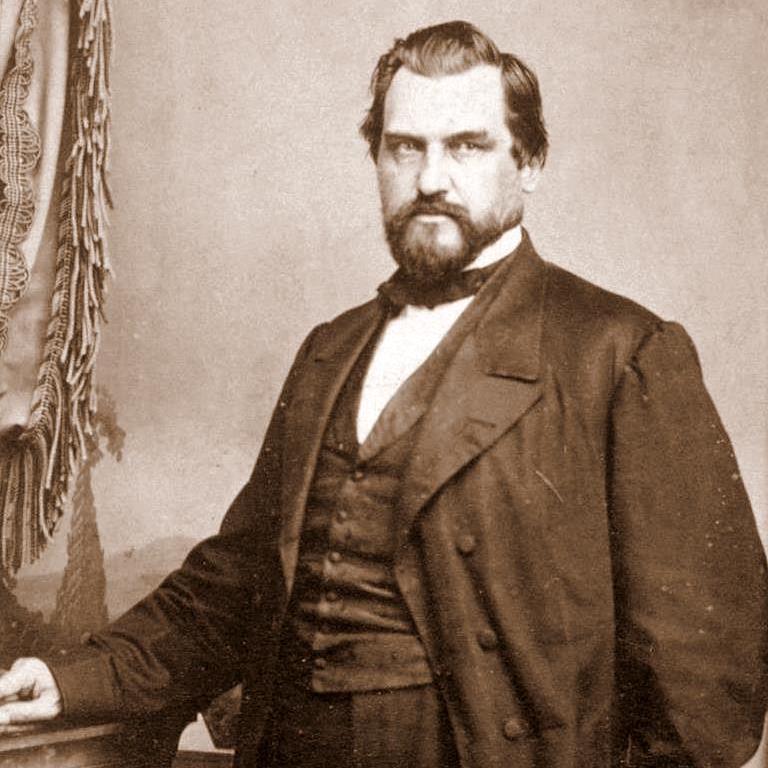
Leland Stanford built his wealth in railroads in the 19th century—an era of rough-and-tumble politics and crony capitalism. He is best known today, however, as the founder of one of the world’s most highly regarded universities, an institution that brought elite education west of the Rockies and incubated many of the 20th century’s technological achievements.
Stanford is best remembered today, however, not for corruption but for a tribute to his only child. Leland DeWitt Stanford was born in 1868, and eventually came to call himself Leland Stanford Jr. On a trip to Europe in 1884, Leland Jr. died of typhoid fever. His parents were beside themselves. In their grief, the Stanfords pledged to themselves that “the children of California shall be our children.”
What the children of California needed, they determined, was a modern university. They traveled through the east, visiting colleges and universities along the Atlantic seaboard. They learned about the practical education and applied sciences taught at new land-grant institutions like Cornell. And they were impressed by the modernizing curricular reforms at many of the old, elite schools like Harvard.
In 1885, they founded the Leland Stanford Junior University. It would be private, co-educational, non-sectarian, and tuition-free. It would offer an education designed to “fit the graduate for some useful pursuit”—focusing on engineering, agriculture, and other practical disciplines in addition to the liberal arts and core sciences. It was consciously aimed to break higher education from its northeastern stranglehold, bringing a great university to the shores of the Pacific.
The Stanfords were intimately involved in virtually all aspects of the university’s planning. They located the school on their stock farm in Palo Alto and hired Frederick Law Olmsted to lay out the grounds. They chose the design of the school, settling on a main quadrangle with facilities made from local materials that reflected the nearby California landscape. With total giving that would amount today to $478 million, Stanford personally funded the operations of the university during its early years. When he died in 1893, his estate was frozen by federal lawsuits over loan repayments on the construction of the Central Pacific. During the lawsuit’s six years, Jane kept the university afloat with her own salary as Leland’s executor.
Stanford University immediately attracted excellent students; Herbert Hoover was in its first class. It opened professional schools in business, engineering, medicine, and law, and soon resoundingly achieved its founders’ goal of making top-flight higher education a truly national rather than regional enterprise. Then in 1939, two Stanford alumni—Bill Hewlett and David Packard—opened an electronics business in their Palo Alto garage, spawning what is now called Silicon Valley, and turning Stanford University into ground zero for some of the most creative entrepreneurship of the digital age.
Tags:
Source: Stanford University
Credit: