Potatoes from Peru were planted in Germany
In 1621, potatoes from Peru were planted in Germany, another example of foreign microbes finding new homes. Botanist Caspar Bauhin called the tuber ‘solanum tuberosum esculentum’, which translates as ‘edible, tuberous nightshade’.
Unlike any previous European crop, potatoes are grown not from seed but from little chunks of tuber—the misnamed “seed potatoes.” Continental farmers regarded this alien food with fascinated suspicion; some believed it an aphrodisiac, others a cause of fever or leprosy. The philosopher-critic Denis Diderot took a middle stance in his Encyclopedia (1751-65), Europe’s first general compendium of Enlightenment thought. “No matter how you prepare it, the root is tasteless and starchy,” he wrote. “It cannot be regarded as an enjoyable food, but it provides abundant, reasonably healthy food for men who want nothing but sustenance.” Diderot viewed the potato as “windy.” (It caused gas.) Still, he gave it the thumbs up. “What is windiness,” he asked, “to the strong bodies of peasants and laborers?”
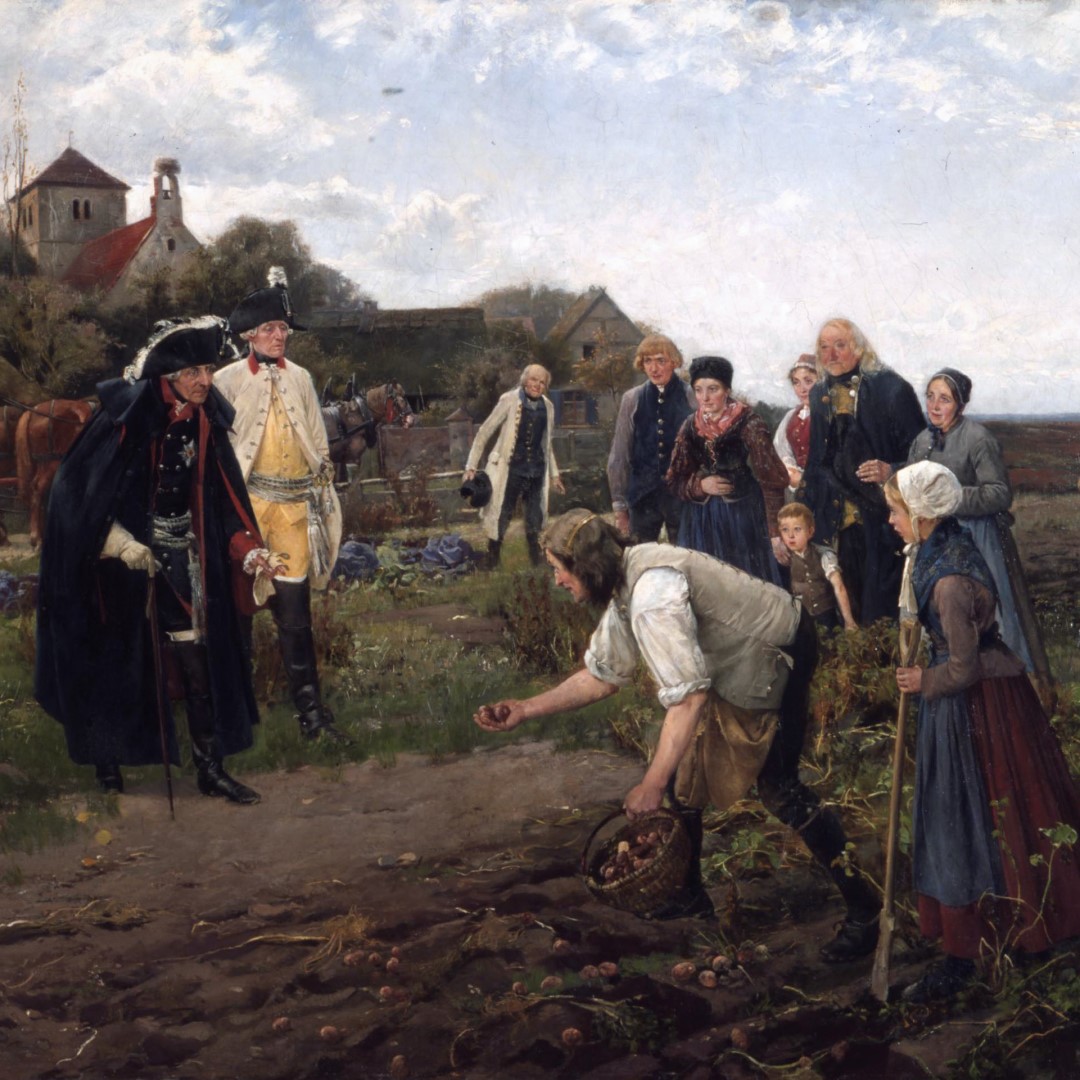
With such halfhearted endorsements, the potato spread slowly. When Prussia was hit by famine in 1744, King Frederick the Great, a potato enthusiast, had to order the peasantry to eat the tubers. In England, 18th-century farmers denounced S. tuberosum as an advance scout for hated Roman Catholicism. “No Potatoes, No Popery!” was an election slogan in 1765. France was especially slow to adopt the spud. Into the fray stepped Antoine-Augustin Parmentier, the potato’s Johnny Appleseed.
Tags:
Source: Smithsonian Institution
Credit: King Frederic the Great (1712-1786) inspects the potato cultivation. Painting ‘The King Everywhere’ by Robert Warthmuller, 1886, Courtesy: Wikipedia.