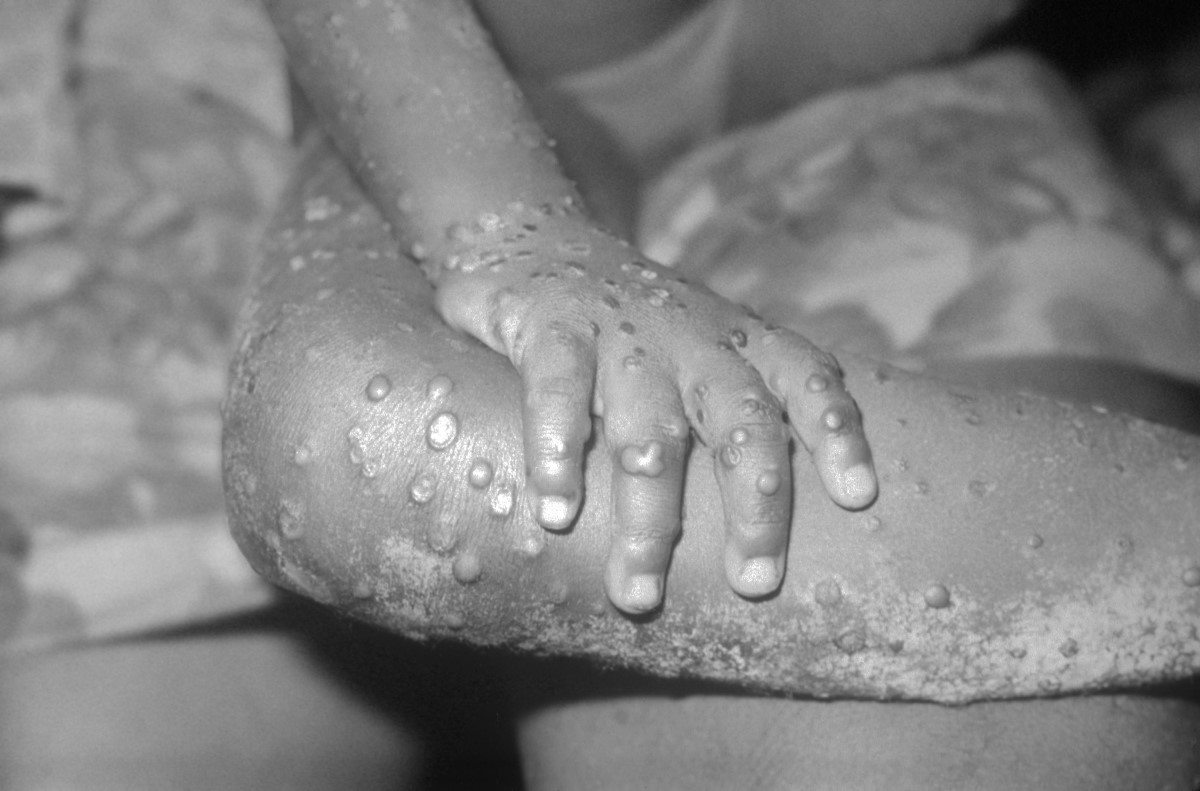
first human case of mpox Reported in the Democratic Republic of Congo
In 1970, the first cases of mpox were observed in the Democratic Republic of Congo, then spread to a number of other African countries. In the Central African Republic, the first case was recorded in the 1980s, in a family living in the south-west of the country. The Institut Pasteur de Bangui monitored this case and the subsequent ones, and has since developed expertise on the disease, so it was well positioned to sound the alarm when the first outbreaks occurred in Africa in 2017-2018. A large-scale study named Afripox was launched with the Institut Pasteur in Paris, which was already working on mpox.
In 2010, the CAR took the decisive step of making mpox a notifiable disease, thereby stepping up its surveillance of this emerging health threat. This resulted in better documentation and a more structured response to any new cases.
In 2012, the CAR began to experience a period of socio-political instability which led people to flee villages and take refuge in forests, and it is likely that this created favorable conditions for direct contact with animals that were potential carriers of MPXV, especially the small animals already suspected. “Despite the sporadic presence of medical groups like Médecins Sans Frontières (MSF), it was hard to maintain continuity of care. MSF regularly sent me samples to confirm the diagnosis,” says Emmanuel Nakouné. This enabled them to observe a link between the localization of forest populations and their proximity with animal reservoirs.
The year 2017 was a milestone in the epidemiology of mpox, with cases reported in regions that had not previously been affected. This geographical spread points to a likely extension of the distribution area for animal reservoirs.
In 2018, a significant outbreak in Nigeria drew international attention. In response, the World Health Organization (WHO) assembled the countries concerned and presented a detailed situation report for the disease. The Institut Pasteur de Bangui was subsequently appointed as a reference institute to boost surveillance capabilities in Central and West Africa, not just in the CAR but also in neighboring countries such as the Republic of the Congo.
The Afripox project was launched in 2019 but soon had to be put on hold because of the COVID-19 pandemic. However, the multi-country mpox outbreak in 2022 sparked renewed concern among health authorities and the scientific community, leading to the resumption of Afripox and its conclusion in 2024, with significant new discoveries.
Mpox is a disease caused by a virus historically found in Central and West Africa. Outbreaks have long been confined to forest regions near the habitat of its likely animal reservoir, thought to be among three species of rodents: the Lorrain dormouse (Graphiurus lorraineus), Gambian or giant pouched rat (Cricetomys gambianus) and Thomas’s rope squirrel (Funisciurus anerythrus, see below). The typical pattern is for children or young adults to become infected on coming into contact with these animals hunted for their meat, and to bring the virus into the household. The other family members contract the disease when they come into contact with the initial patient. “Transmission generally occurs through contact with skin lesions, which contain infectious viral particles, or with contaminated items, especially bedding,” explains Antoine Gessain, a virologist at the Institut Pasteur. Clinical signs are a maculopapular rash, which may affect the soles of the feet and palms of the hands, and swollen lymph nodes.
Tags:
Source: Institut Pasteur
Credit: