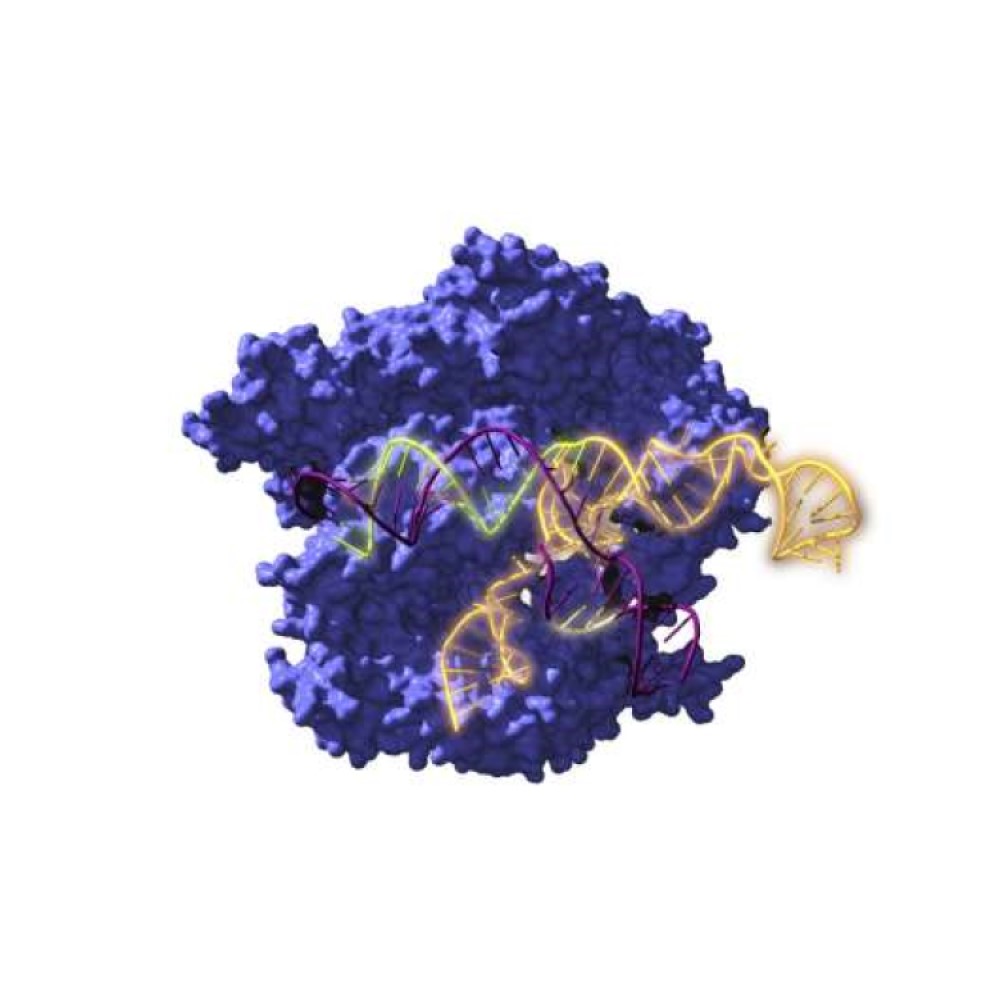
2.6 billion-year-old ancestors of the CRISPR gene-editing tool resurrected
On Jan. 4, 2023, an international research group announced it had for the first time reconstructed ancestors dating back 2.6 billion years of the well-known CRISPR-Cas system, and studied their evolution over time.
The acronym CRISPR refers to the repeated sequences present in the DNA of bacteria and archaea (prokaryotic organisms). Among the repeats, these microorganisms harbor fragments of genetic material from viruses that infected their ancestors; that enables them to recognize a repeat infection and defend themselves by cutting the invaders’ DNA using Cas proteins associated with these repeats.
It is a mechanism (CRISPR-Cas system) of antiviral defense. This ability to recognize DNA sequences is the basis of their usefulness, and they act as if they were molecular scissors. Nowadays CRISPR-Cas technology enables pieces of genetic material to be cut and pasted into any cell, so that it can be used to edit DNA.
Current research efforts focus on finding new versions of CRISPR-Cas systems with distinct properties in the farthest reaches of the globe. To do this, systems of different species living in extreme environments are explored, or molecular design techniques are applied to modify them. A radically different way of finding new systems is to look for them in the past, which is in fact the basis of this research
The results suggest that the revitalized systems not only work, but are more versatile than current versions and could have revolutionary applications. The results were published in Nature Microbiology.
Tags:
Source: Phys.org
Credit: